Sunday, 15 March 2020

Women's Work

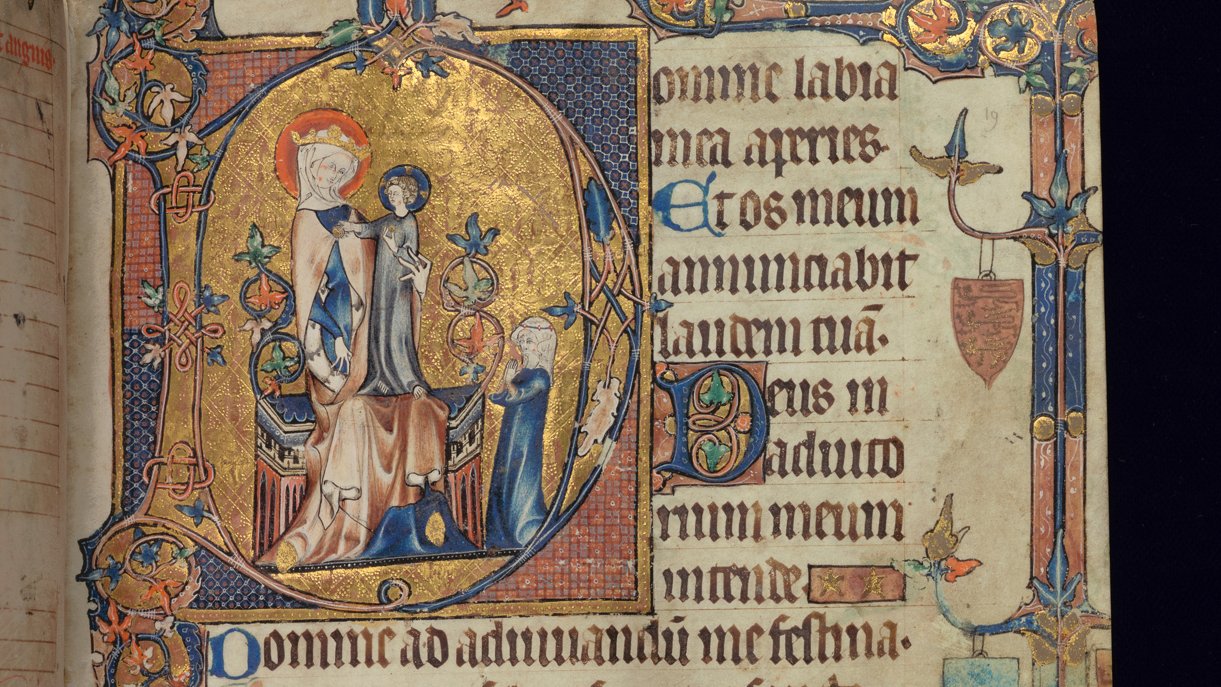
The woman on the right is carding wool; that is, working it between two instruments like large hairbrushes covered with little hooks, to disentangle it and ensure the fibres all point in the same way, producing a kind of fuffy sausage.
   The lady on the left is spinning the result on what was called the "Great Wheel", an important invention of the later Middle Ages. 
.Image
Spinning was always done by women, and was their main occupation after farmwork, which is why an unmarried woman became known as a Spinster. Weaving cloth was usually done by men; but a woman weaver was known as a Webster. Other surnames originating in the woollen industry include Fuller and Dyer. Fulling involved trampling the woollen cloth to pre-shrink it; using "fuller's earth" in the process. After this, cloth would be stretched out on a "tenter frame" to preserve its shape whilst drying: hence the phrase "to be on tenterhooks".
   
   From the earliest mediaeval times, raw wool and woollen cloth constituted the vast majority of English exports, until overtaken by cotton at the end of the 18th century. Very many of the great churches and monasteries were built on the profits of the woollen industry; almost all of which would have passed through women's fingers!  

Incidentally, the shadowy figures in the background show that this document is a "Palimpsest": a previously-used parchment that had been carefully scraped so that it could be used again. Parchment was too valuable to be thrown away!

Friday, 21 February 2020

The Arch of Titus and the Menorah

The Arch of Titus in the Forum in Rome was erected to celebrate the memory of the Emperor Titus (reigned 79-81).

.
His main achievement had come when his father, the Emperor Vespasian, had placed him in charge of crushing the great Jewish revolt, which culminated in the destruction of the Temple in the year 70 A.D. The interior of the arch therefore  depicts scenes form his triumph, including the plunder from Jerusalem being carried in procession.
   Here is the Menorah; the great sacred candlestick from the Temple.
.
.Image result for Arch of Titus

 Originally the scene would have been brightly painted, looking something like this:-
.Image result for Arch of Titus

The Menorah remained in Rome until the city was sacked by the Vandals in 455 A.D., when, along with other plunder it was taken to Carthage. I don't know what happened to it after that. A job for Indiana Jones, perhaps?
   TheTemple in Jerusalem has never been rebuilt.

Friday, 31 January 2020

A different kind of freedom?

The western liberal tradition has been that individual liberty is fundamentally the ability to "do your own thing" with minimal interference from the state. It is sometimes mocked as being no more than a "Liberty pile": a list of things that you are, or are not, permitted to do; the latter hopefully being very short. But a wholly different concept of liberty does exist. It is found in the prayer of St. Ignatius Loyola,in the phrase, "Christ,whose service is perfect freedom". A similar concept is advanced by Rousseau in his "Social Contract", with his argument that "true freedom" is to be found in following the "General Will".
   The doctrine of the General Will is best understood in the following analogy. Suppose the members of a sports team (football, cricket, rugby or whatever) are asked what they would hope for at the next match. Every team member would reply, "I'd want the team to win, and I'd like me to have a brilliant game". In Rousseauist terminology, the desire for victory for the team is the "General Will". All team members should subordinate their individual desires for personal glory to the cause of team victory; and, indeed, individuals who are deemed to be playing solely for their personal glory are not respected by their fellow team members. Rousseau, however, confuses the picture by calling this overaching commitment to the team as "freedom", and saying that those who refuse to give it must be excluded: these people are not being "free", but merely perverse. As with Loyola, freedom is not to be found in "doing your own thing", but in total commitment to a greater cause.
   This is all very well for a small, voluntary organisation like a football team, or a religious faith, (or, for that matter, a company), but is it at all applicable to a much larger and essentially non-voluntary body, such as a state? Rousseau acknowledges that it can really only apply to very small communities, but Hegel, in the early 19th century, believed it held good for the State of his day, within which all the citizens would gain true freedom in return for absolute commitment. Hegel's dictum on this has been translated as, "The state is the march of God through the world". Bertrand Russell mocked this as "freedom to obey the policeman".
   Karl Marx was much influenced by Hegel in his early days. He always maintained that, because of the inevitability of class conflict and exploitation, "bourgeois liberty" was a fraud, because most people could not afford to make meaningful life-choices. After the establishment of Communist society, however, there would no longer be any conflict between individual desires and the good of society as a whole. But obviously, this Utopian society was never actually brought into existence. What Marxist governments maintained, however, was that they were well on the way to achieving Communism, and that therefore all citizens had a duty to submerge their individual desires in this movement, because it represented not the "march of God", but the march of historical inevitability. Those who resisted this were exhibiting not personal freedom, but "petty-bourgeois individuality", or some such condemnatory term, or were even perhaps active saboteurs.
    It cannot be denied that many people experience a sense of fulfilment in immersing themselves in some greater cause; but on the whole, "doing your own thing"; making your own lifestyle choices, seems preferable to compulsion.

Saturday, 11 January 2020

The salutary tale of Ed Punch

Despite his impeccably middle-class background, Edwin was always fascinated by organized crime and the activities of gangster leaders. This led to his hanging around in the bars and clubs of Soho, hoping to be noticed by the Kray twins and their associates, who at this time were enjoying the heyday of their power in the district. This made him feel superior to his less adventurous friends.
   For a long time he was simply ignored, but one evening a thief who was being pursued by the police thrust a piece of jewellery into his hand with the words, “Hold that for me, mate!” Quite probably he had mistaken Edwin for someone else in the gloom. The police arrived shortly afterwards and questioned everyone on the premises, but Edwin, with his respectable appearance and accent, was allowed to leave without being searched.
   He felt immensely proud of his coolness under pressure. A few days later he was approached by two threatening-looking men in dark suits who hustled him into a car and demanded that he handed over the stolen item to them. For a wild moment he considered answering them with snarling defiance, but common sense prevailed. Managing to show no trace of the gnawing fear he felt inside, Edwin answered them respectfully and politely, complied with their wishes without protest, and indicated that he was willing to undertake any similar work in the future. Feeling, probably correctly, that his real name of Edwin Prosserly, was nowhere near hard enough for a would-be gangster, he told them that he was called Ed Punch. His self-regard increased greatly in consequence.
   Before long he was approached again. Edwin sensed that he was being tested, with increasingly important tasks. He was asked to dispose of a pistol, which he duly chucked into the Thames near Windsor early one Sunday morning. Was it, he wondered with a thrill of vicarious danger, a murder weapon? For this task he was rewarded with a considerable amount of money in old banknotes. He decided to devote himself to this new, exciting and potentially lucrative life; and he dropped out of college.
   He rented a flat in Old Compton Street, where shortly afterwards he was required to play host to Tony, a young man he had never met before. Edwin felt very uneasy in Tony’s presence, and took great care not to annoy him, for the young man showed every sign of being a psychopath. He was most relieved when after a couple of weeks Tony disappeared and was not seen again.
    Other tasks followed over subsequent months. He drove getaway cars and later disposed of them, he kept account-books for semi-literate criminals, and occasionally vacated his flat when it was required for other purposes by persons unknown. He was well paid for his work, but the tension was beginning to take its toll. He could sense that, although the mobsters occasionally found him useful, he wasn’t really one of them and never would be: he was just a middle-class kid who thought it was cool to hang around with gangsters, and that they might cast him off or betray him at any moment, without a second thought. And did he really want to spend the rest of his life in company with men like Tony?
     Then one day the police conducted a swoop and arrested the entire gang. They were all interrogated separately, on a charge of involvement in a murder. It should surprise no-one that Edwin was the first to crack and turn Queen’s Evidence in return for immunity from prosecution.


    He is believed to be living in South Africa under an assumed name.  It is safe to assume that he never admits to ever having been called Ed Punch.  .
.
.

Monday, 16 December 2019

Roman Names: an introductory note

A Roman aristocrat of the 1st century B.C.; the "classical" period most studied as history, and whose version of Latin we are taught at school, would normally have three names. Prominent examples are Caius Julius Caesar, his assassin Marcus Junius Brutus, and the dictator Lucius Cornelius Sulla.
   The first of these was the personal name, and would probably only be used when a boy was spoken to by his mother, or when as an adult was addressed in a fully formal manner.
   The second was the name of the tribe, or clan. Roman politics for many generations was dominated by a handful of great aristocratic clans, of which the Julii, Cornelii and Junii are examples.
   The third is known as the "cognomen". It was often a kind of nickname, perhaps dating from centuries earlier, in a form of latin that had become archaic, to distinguish between the different branches of the great clans. A cognomen would be inherited, and as a result some became quite comical. Thus "Caesar" meant "hairy", whereas Julius Caesar was bald. The cognomen of Lucius Domitius Ahenobarbus meant "bronze-beard", whereas all Roman aristocrats of the classical period were cleanshaven. The famous orator and writer Marcus Tullius Cicero (who was not an aristocrat, but came from an obscure family of provincial gentry) bore a cognomen that literally meant "chickpea", probably indicating a prominent pimple or wart on the face! 
   An extra name, known as an agnomen, might also be awarded for some great military feat. At the end of the 3rd cetury B.C. the great general Publius Cornelius Scipio was awarded the agnomen of Africanus after his defeat of Hannibal at the battle of Zama.

   Things were confused by adoptions and consequent changes of name. The most famous came about when Caesar, who had no son to succeed him, named as his heir his sister's son, called Gaius Octavius. This young man changed his name, first to Octavianus, and then to Gaius Julius Caesar; and in 27 B.C. the Senate granted him the agnomen of Augustus. He is usually called the first Roman Emperor (1), though in fact he neither he nor his immediate successors ever acknowledged any such title.
   Augstus had no son, and his grandsons all died young, so for his military campaigns he relied upon his two stepsons, who came from the great aristocratic Claudii clan. They were the brothers Tiberius Claudius Nero Drusus (2) and Gaius Claudius Nero Drusus. After the death of Gaius, his son, another Gaius Claudius Nero Drusus, won significant victories on the Rhine frontier, and was granted the agnomen of Germanicus. His son acompanied the armies as a child, dressed in a miniature military uniform that caused the soldiers to give him the nickname Caligula ("Little boots") (3). The younger  brother of Germanicus, another Tiberius Claudius Nero Drusus (4), sent the legions to conquer Britain in 43 A.D., and was given the agnomen of Britannicus. He himself adopted as his heir his stepson, Lucius Domitius Ahenobarbus (5), who duly changed his name to that of his stepfather.  

   Daughters would merely have a feminine version of their father's clan-name: thus Caesar's daughter was called Julia, Cicero's daughter was called Tullia, and so forth.

This proliferation of very similar names creates problems for historians, who therefore tend to settle on a single name for convenience. Thus Gnaeus Pompeius Maximus (the agnomen meaning "Greatest") is generally known as Pompey, and the five men indicated above by numerals are the first five Emperors, now known under the names of Augustus, Tiberius, Caligula, Claudius and Nero. 

Sunday, 1 December 2019

150 Years Ago!

Report on an election of November 1869, from the "Shrewsbury Chronicle":-

"The proceedings of the day were devoid of much of the drunkenness and disorderly conduct which has, too frequently, been witnessed on such occasions. The cause of this undoubtedly was that the successful candidates put themselves forward otherwise than by the old system of bribery and "open" public houses. Another reason was that the polling places were not, as formerly, held at public houses, a mode of conducting an election which could not but tend to bad results"

In November 1794 the same newspaper published a report that "No intelligence whatever has now been received from the British Army since Tuesday." This never fails to raise a smile nowadays. It did of course mean "no information", though in fact the Flanders campaign, which it refers to, was exceptionally badly planned and executed, and convinced the future Duke of Wellington, who was present, of the need to take military matters much more seriously.