Wednesday, 26 September 2012

Emma Pooley

Although I know very little about cycling, I would like to express my admiration for Emma Pooley, a key member of the British team in the last two Olympic Games.
Emma was born in October 1982, brought up in Norwich and educated at Trinity Hall college, Cambridge, where she graduated in Engineering. She was originally a cross-country runner, and gained a “Blue” for triathlon; only taking up cycling seriously after a foot injury forced her to train on an exercise bike. She hardly has the physique of a top cyclist, being very small (5 feet 1 inch high, and weighing less than 8 stone), which means that she sometimes has difficulty generating the sheer power needed on the flat, but has the compensation of making her one of the very best hill-climbers in the world.

Emma currently lives in Zurich, where she is studying for a Ph.D. in geotechnical engineering at ETH university. Her supervisor (Sarah Springman, herself a noted triathlete) is, she says, is “very understanding”, allowing her to spend the winter training in Australia.
She joined a professional team in 2005 and first represented Britain at the 2007 World Championships. In the 2008 Olympics her role in the road race was tactical, setting it up for Nicole Cooke to win the event, but Emma then came into her own in the Time Trial, where she took second place and a silver medal. There was a reprise of this in London this year, where she again helped to protect the sprinters (we all remember Emma leading the peloton over Box Hill) and thus set up Lizzie Armistead’s second place. But Emma was unable to match her Beijing success in the Time Trial: the terrain was too flat to play to her strengths, and she finished sixth.
At the World Championships in Holland in September, Emma was extremely disappointed with her performance (4th in the time trial, 15th in the road race, and leading her sponsorship team to 3rd place in the team event), though in fact this was far better than was managed by any other senior British cyclist, male or female. She said she felt she had “disimproved” over the past year, and began to talk about taking a year off from the sport, or even retiring completely, to concentrate on her academic studies; which, she tells us, concern mining waste and related matters.

She is very forthright at interviews. Her disappointment at not winning comes through strongly, though she has never ever voiced a word of criticism at a team-mate, or even complained about the conditions; instead she invariably places the blame on herself, for not doing better. On the other hand, she does not hide her anger at the lack of official encouragement for women’s cycling, and with good cause: her many successes outside the Olympics have generally been ignored by the media, all the teams she had joined have quickly folded, and the financial rewards for the women are pitifully small compared with those available for the men (though cycling, sadly, is by no means unique in this discrimination: see also women’s cricket, football, etc).

Emma is clearly a serious-minded and highly intelligent lady. As well as her academic achievements she speaks several languages, and has made a video for Amnesty International, appealing for help for Fatima Hussein Badi, held without trial in the Yemen accused of murdering her husband, and threatened with rape if she does not confess. We could do with more people like Emma in professional sport! If she does retire, her motives will be understandable, but she will be greatly missed.

Here are a few pictures of Emma.
Postscript: Happily, Emma decided not to retire quite yet! She won two silver medals at the Commonwealth Games this summer, and also completed her Ph.D. Only now has she decided to give up competitive cycling. Instead, she intends to concentrate on Triathlon!

January 2015: Emma was on the winning team of "Celebrity University Challenge" for BBC television, representing her old college of Trinity Hall, Cambridge! 

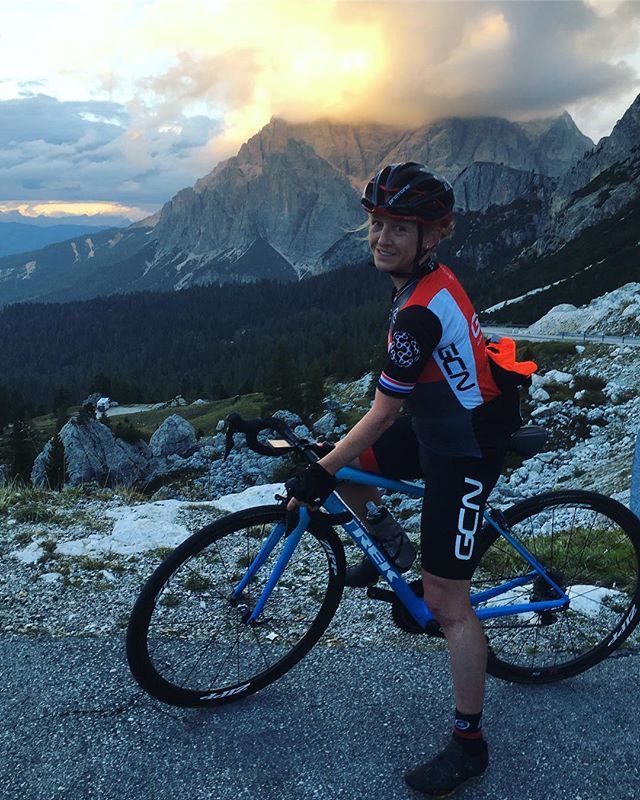
This is Emma today: still cycling up mountains and loving it! 


Friday, 21 September 2012

Ullswater

This is a tribute to my father, who lived for almost half a century at Penrith in the Lake District, a few miles from Ullswater. He took a great many photographs of the lake, of which this is a very small selection As you can see, he was particularly interested in trying to capture the effects of light on and around the lake at different times of the year. I hope you like them

Saturday, 8 September 2012

Edward Heath and Madame Furtseva

Yekaterina Alexeyevna Furtseva was Soviet Minister of Culture in the days of Nikita Khrushchev, and, incidentally, the only woman in the history of the U.S.S.R. ever to reach the dizzy heights of the Politburo. When this appalling woman visited London, Harold Macmillan decided that Edward Heath was the most appropriate minister to arrange an itinerary for her. But all did not go according to plan. When Heath incautiously asked a question about Stravinsky's ballets there was a prolonged debate in the Soviet camp as to whether Stravinsky would ever become ideologically acceptable enough for performance in Moscow. Worse, he proposed a visit to Henry Moore's studio. This brought some urgent questions. Was Moore a "modern" sculptor? Yes. Did that mean his sculptures had holes in them? Again, yes.
"In that case", Heath was informed, "It would be quite improper for a Soviet Minister of Culture to visit Henry Moore's studio! I think it would be better if we cancelled all the arrangements for the rest of the week!"

This raises the question: why are dictatorial regimes always so afraid of the arts?

(Source: Edward Heath: "Music")

Thursday, 6 September 2012

P. G. Wodehouse and Fascism

The great comic writer P. G. Wodehouse was living in Le Touquet when he was captured in the German offensive in 1940. His significance was realised by Doctor Goebbels's propaganda department and, very foolishly, he agreed to make some radio broadcasts for the Nazis. Although the actual content of these was perfectly innocuous, there was a massive popular outcry in Britain, some institutions banned his books, and there were demands that he should be prosecuted as a traitor. In the summer of 1945 George Orwell felt obliged to write an essay, “In Defence of P. G. Wodehouse”, arguing that Wodehouse was no more than a complete innocent in political understanding. Some people, said Orwell, had detected “Fascist tendencies” in Wodehouse’s stories; whereas in fact there were no post-1914 tendencies at all! Eventually the fuss died down, but Wodehouse moved to the United States and took up American citizenship. Near the end of his life he was given a knighthood, showing that all was now forgiven.

However, I do not think Orwell was right. In “The Code of the Woosters”, which is surely the best of the “Jeeves and Wooster” novels (and which, for some reason, Orwell fails to mention at all in his essay), Wodehouse does introduce an actual Fascist character, by name of Roderick Spode. It is instructive to see how he is treated.
Bertie Wooster describes his first impression on seeing Spode:-
“It was as if nature had intended to make a gorilla, and had changed its mind at the last moment …… I don’t know if you have ever seen those pictures in the papers of Dictators with tilted chins and blazing eyes, inflaming the populace with fiery words on the occasion of the opening of a new skittle alley, but that was what he reminded me of”.
The exquisite bathos of “skittle alley” sets the tone for how Wodehouse will proceed to demolish Spode throughout the book.

Spode does have ambitions of becoming a dictator. As Bertie’s friend Gussie explains:-
“Roderick Spode is the founder and head of the Saviours of Britain, a Fascist organisation better known as the Black Shorts. His general idea is to make himself a Dictator.”
Bertie interposes: “By the way, when you say “shorts”, you mean “shirts”, surely?”
“No. By the time Spode formed his association, there were no shirts left. He and his adherents wear black shorts”.
“Footer bags, you mean?”
“Yes.”
“How perfectly foul.”

Once again, the perfect note of bathos in “footer bags” ("Footer" being the Etonian slang for football). And there is more to come. Spode bullies and intimidates Bertie and Gussie, and at one point is about to beat Bertie up, but Bertie is able to turn the tables and blackmail Spode into submission. Jeeves had discovered Spode’s guilty secret: that he has another career as a talented and successful designer of ladies’ knickers!
“Good Lord, Jeeves! No wonder he didn’t want a thing like that to come out.”
“No, sir. It would unquestionably jeopardise his authority over his followers.”
“You can’t be a successful Dictator and design women’s underclothing. One thing or the other. Not both.”
“Precisely, sir.”

With this weapon to hand, Bertie is able to tell Spode in no uncertain terms what he thinks of him:-
“It is about time that some public-spirited person came along and told you where you got off. The trouble with you, Spode, is that because you have succeeded in inducing a handful of half-wits to disfigure the London scene by going about in black shorts, you think you’re someone. You hear them shouting “Heil Spode!” and you imagine it is the Voice of the People. That is where you make your bloomer. What the Voice of the People is saying is: “Look at that frightful ass Spode swanking about in footer bags! Did you ever in your puff see such a perfect perisher?””

How could anyone who read these words ever imagine that their author was pro-Fascist? There could hardly be a more ruthless, and perceptive, hatchet-job. One can only wish that all would-be dictators could be addressed in this manner!

Saturday, 1 September 2012

Americans in London

I was told this story by an American couple I met in Prague. It's an anecdote I would very much like to believe; and I can only hope they weren't talking about themselves.
An American lady in London asked, "At road crossings, when the little green man comes up, why is there a bleep-bleep-bleep noise?"
"That's to help blind people", she was told.
"Ah!" she replied, "But in America, we don't let blind people drive!"

Monday, 27 August 2012

Etna: Mount Doom!

I have been a lover of Tolkien's "Lord of the Rings" since I was very young, and as soon as I saw Etna I recognised it: here was Mount Doom itself!

At almost 11,000 feet high, far taller than any peak in Britain, Etna dominates the north-eastern corner of Sicily. It is the most active volcano in Europe, and boils over every few years. In the surrounding regions you can find what appear to be enormous fossilised caterpillars snaking out over the ground, which are trails of solidified lava from earlier eruptions. Sometimes they reach as far as the sea.
Vesuvius looks a very feeble mountain by comparison. I am surprised when I am told that the Romans could not understand what was happening when Vesuvius erupted in 79 AD, since they must surely have noticed the resemblance to Etna. Virgil in the "Aeneid" describes an eruption, which must surely be based on Etna.


When I visited Etna, some years ago, the cable-car up the mountain was out of action, since the top section had been melted in the last eruption. We were driven most of the way up by Land Rover, and then had to walk the last section. It looked, and felt, like a gigantic heap of coke. The air at that altitude was cold, even in August, but we could sense the heat of the volcano through the soles of our shoes. There were layers of snow left over from a previous winter, preserved by being covered in ash: they resembled an extremely dirty Neapolitan ice cream.


This is a view down into the main crater. We could see the floor deep below us, and were not sure whether it was solid or liquid. If we tumbled down the very steep sides into it, would we sink? Constant smoke and steam rose from the depths, clouding the view to the far side. One could imagine the mouth of Hell looking something like this. It was here, according to tradition, that the Ancient Greek philosopher Empedocles hurled himself in, to prove he was an immortal god.

"Great Empedocles, that ardent soul,
Jumped into Etna and was roasted whole"

("Matthew Arnold wrote a poem on this subject, but, although one of his worst, it does not contain the above couplet." - Bertrand Russell, "History of Western Philosophy", chapter VI)


This is not Frodo and Sam on the brink of the crater of Mount Doom, though it might well pass for such a shot.


I am refusing to follow the example of Empedocles!


Tuesday, 21 August 2012

Nationality

The Battle of Waterloo in 1815 was fought between a Frenchman who wasn't really French and an Englishman who wasn't really English.


Napoleon was born in Corsica in 1769. The island had long been subject to the Republic of Genoa, but after a protracted struggle for independence, which attracted the admiration of Rousseau and James Boswell amongst others, Corsica was sold to France by the Genoese in 1768. The name "Napoleon" was unknown in France before his time. To this day, Corsicans are seen as being quite different from other French citizens.
   The future Duke of Wellington was also born in 1769, in his case in Dublin. His father was an Irish nobleman and he himself sat in the Irish Parliament before the Act of Union with Britain. When it was suggested to Wellington that he was therefore, in fact, Irish, he replied, "Sir, being born in a stable does not make you a horse!"

This kind of "displaced nationalism" is not unusual amongst great national leaders. George Orwell once wrote that, "One quite commonly finds that great national leaders, or the founders of nationalist movements, do not even belong to the country they have glorified. Sometimes they are outright foreigners, or more often they come from peripheral areas where nationality is doubtful" ("Notes on Nationalism": 1945). As well as the obvious examples, Orwell cited Lord Beaverbrook, a Canadian who spent most of his life in Britain as a strongly nationalist newspaper magnate and political intriguer, and Benjamin Disraeli, a maverick Conservative Prime Minister who invented the title "Empress of India" for Queen Victoria, but was at the same time immensely proud of his Jewish heritage.

The two greatest European dictators of the twentieth century certainly fit Orwell's description. Most people know that Adolf Hitler, although obsessed with the notion of a German race, was born a citizen of the Austrian Empire, whose multi-racial character he despised. Although he joined the German army in 1914, he did not bother to take up German citizenship until 1932. Stalin was a Georgian, by name Josef Vissarionovich Djugashvili, who only learnt to speak Russian at school, but who in 1923 alarmed even Lenin by the brutality with which he compelled his Georgian homeland to be incorporated into the Soviet Union. (Some Georgians have maintained that Stalin was not a true Georgian at all, but was half Ossetian!). Then again, Hendrik Verwoerd, who set up the full apartheid system in South Africa after the Second World War, was not a true Boer, having been born in Holland. Eamon de Valera, the Irish leader who plunged his country into civil war rather than accept the compromise treaty of 1921, was born in New York of a Cuban-Spanish father; hence his very un-Irish surname. In the great crisis over Irish Home Rule before the First World War, the resistance of Ulster was led by Sir Edward Carson, who was not an Ulsterman but a barrister most famous for his demolition of Oscar Wilde in 1895; strongly supported by the Conservative leader Andrew Bonar Law, who was born in Canada and later became the only British Prime Minister not to have been born in the U.K.

The last word on this subject must go to David Lloyd George, Prime Minister during the First World War and at the Versailles Peace Conference, and probably the most famous Welshman of all time. He was actually born in Manchester, but as he told his son, "Nationality has nothing to do with geography: it is a state of mind".