Monday, 30 September 2013

Gangs of New York, by Herbert Asbury

This classic account was published in 1927; at the height, therefore, of the Prohibition era, when organised crime in New York, Chicago and many other cities rose to unprecedented levels of wealth and power. It comes as a surprise, therefore, to discover that the final chapter is headed “The Passing of the Gangster”, since Asbury could hardly have been unaware that the gangsters were emerging from the slums to make vast sums of money from bootlegging, and use it to thoroughly corrupt the city police and politicians and become a serious menace to society. The reason for this apparent dichotomy lies in Asbury’s definition of what constitutes a gang.

By a “gang” Asbury means the violent mobs from the revolting slums in and around the Five Points area of lower Manhatten in the 19th century (the original meaning of the term “downtown”), who brawled with each other and with the police, maimed and robbed passers-by, and sometimes sallied forth, numbered in scores or even hundreds, to murder and riot. The names of some of these gangs live on in legend: the Plug Uglies, the Dead Rabbits, the Whyos; later, the Hudson Dusters, the Gophers and many others. The early gang members were mostly of Irish extraction, and their favoured weapons were the club, the knife, the knuckle-duster, and an ingenious instrument to gouge out the eyes of victims. Often the women were as ferocious as the men. Asbury has a separate chapter on the Chinese gangs, whose murderous wars, being largely confined within the Chinese community, were less known to the general public.

Asbury makes it clear that whole districts of downtown Manhatten were effectively "no-go" areas for the police, but also shows that a level of corruption assisted the gangs' progress. Unscrupulous politicians employed the gangs at election time to wreck opposition campaigns and intimidate voters, and having gained power would instruct the police to turn a blind eye to certain gang activities. Many policemen found it much less dangerous to take their cut of gangster profits than to attempt to suppress the gangs, and the immigrant communities often looked on the gangsters as heroes rather than villains.

The Martin Scorsese film that bears the same title was based, rather loosely, on Asbury's book. What the film did was to take from the book a number of of real-life individuals (Bill the Butcher and Boss Tweed), locations (the Old Brewery), gangs (the Dead Rabbits) and events (the draft riots of 1863) and run them all together, when in reality they were spread over several decades (Bill Poole, alias "Bill the Butcher", who was by no means the charismatic personality of the movie, was actually shot dead in 1853, whereas Boss Tweed's spectacularly corrupt city administration flourished after the Civil War). This technique makes bad history, but good movies! The first "Godfather" film was similar: taking famous incidents from the lives of different real-life gangsters and making them all happen to the same person. (It is perhaps not surprising that the scariest part of Asbury's book - the description of how, in the great Draft Riots, the gangs tortured and murdered any Negroes they found - does not feature in Scorsese's film)

The penultimate chapter of the book, which deals with the years before the First World War, is headed "The Last of the Gang Wars". Asbury observes that things are changing. The gun had replaced the club and the knife as the favoured weapon of gangdom. Muggings and robbery as a means of raising funds were being supplanted by extorting money from brothels and gambling dens, and by providing thugs to intervene in labour disputes, schlamming either strikers or blacklegs depending on who paid them. Endless brawling over territory was giving way to targeted assassination. Police and politicians increasingly received back-handers to look the other way. New waves of immigrants had moved into the Lower East Side and parts of Brooklyn, and gave birth to new gangs: Italian and Jewish rather than Irish. New names emerged that looked forward to the Prohibition era: Owen "the killer" Madden, Jacob "little Augie" Orgen, and the leader of the James Street gang, Johnny Torrio. But Asbury fails to draw appropriate conclusions from the obvious signs of changing times. A glance at the index shows that the word "Mafia" appears nowhere in the book. Of Torrio he records only that he left New York, moved west and "soon became a conspicuous figure in the underworld of Chicago". This is a profound understatement, for Torrio became one of the most seminal figures in the history of organised crime. The message he preached to the Chicago gangs, which was taken up in New York too, was: "There's enough money out there to make us all rich; but too many dead bodies littering the streets gets crime a bad name, and the public may demand action. So let's form alliances rather than fight, agree to keep to our own territories and our own fields of operations, then we can pay off the cops and the politicians and everything will be fine". And, although some of the more psychopathic gangsters took no notice, it gradually became gang strategy. To assist his control in Chicago, Torrio called in a promising young thug from Brooklyn. His name was Al Capone. It is unsurprising to find that this name is also missing from Asbury's index.

By his own definitions, Asbury was right. New York had gradually become more civilized. The huge mobs who swarmed out of the noisome slums of lower Manhatten to fight street battles and terrorize respectable citizens no longer existed by the 1920s. But the gangs still flourished, though in a different form, and were more insidiously powerful than ever.

Monday, 16 September 2013

1914: The Coming of War

                                Europe in 1914.

The coming anniversary of the outbreak of the First World War has already led to the appearance of several weighty books on the subject. I do not propose to add to the debate on why the war started, but merely to outline the chronology of events.


The Background

For centuries, the dominant power on the continent of Europe had been France. This changed for ever in 1870-71, with the defeat of France by Prussia and the creation of the German Empire under William I as Kaiser.  The new empire was now the most powerful state in Europe, both militarily and industrially. Bismarck, the architect and now Chancellor of the new Germany, realised that German interests were henceforth best served by preserving the status quo. His foreign policy was therefore dedicated to the isolation of France, who would always be seeking revenge for her defeat. He therefore negotiated a Triple Alliance with the Austrian Empire and Italy, whilst simultaneously signing the secret Reinsurance Treaty with Russia. He always strove to be on good terms with Britain. To his successors he left two pieces of advice: never fight against Russia, and don’t tie the sleek German battleship to the worm-eaten Austrian hulk. Both of these came to be ignored.
Unfortunately the German Empire, though strong economically and militarily was politically primitive. The Reichstag was the most democratic Parliament in Europe, but Bismarck had ensured that it had hardly any control over the government, which was answerable to the Kaiser alone. And in 1888 William II became Kaiser of Germany, following the deaths in quick succession of his grandfather and father. In 1890 he sacked Chancellor Bismarck and took personal control. He proved to be an excitable, rather unstable young man, whose erratic attempts at personal diplomacy served only to sow confusion and suspicion. His aim was to win Germany “a place in the sun”: a goal which Bismarck would have regarded as dangerously vague and lacking in content.
One rapid consequence was the failure to renew Bismarck’s treaty with Russia. Instead the French seized their opportunity, and in 1893 a Franco-Russian commercial treaty and alliance was signed. Although William was to make personal appeals to the Tsar, this link was never broken, and Germany now faced the alarming prospect of a war on two fronts.

For the latter part of the 19th century Britain had followed a policy which won the nickname of “splendid isolation”. This meant, not withdrawal from the continent, but the refusal to commit to a firm alliance with any other power. Instead, Britain would use its influence to make small adjustments to the balance, to avoid major conflicts and prevent any one country achieving dominance. There were no permanent “good guys” or “bad guys” in British diplomacy. There was still a residual, traditional suspicion of France, which resurfaced as late as the 1890s. The nearest to being a permanent “bad guy” was Russia; disliked for its repressive government and for its imperialist ambitions in Central Asia and the Balkans (shades of the 20th century Cold War!). The only continental war Britain fought in the century after the fall of Napoleon was against Russia in the Crimea in the 1850s, at there was a threat of war against Russia in the Balkan crisis of 1877-78. On the other hand, many prominent British politicians favoured closer friendship with Germany, and it was not Britain’s fault that this never came about.
For centuries Britain, with her small army, had relied upon the superiority of her navy to protect her from invasion. In the 18th and 19th centuries, this superiority at sea had enabled her to build up a vast world-wide empire, though paradoxically this meant that Britain had even fewer soldiers to be deployed on the European continent. By the start of the 20th  century Britain was the only major European power without a system of military conscription, though as long as the fleet reigned supreme, this did not matter very much. But now, beginning in 1898, Germany began to build its own High Seas Fleet, and continued to expand its naval programme in subsequent years. Unlike Britain, Germany did not have a world-wide empire to protect, and this naval project had to be seen as a threat to Britain. It was made very clear that Germany could either have a large fighting navy or British friendship, but not both, but without result. Britain had to respond in kind, and soon the 20th century’s first serious arms race had developed, as each side tried to outbuild the other in the new class of super-battleships, the Dreadnaughts.
There were inevitable diplomatic repercussions. In 1902 Britain signed an alliance with the rising power, Japan: her first alliance for many decades. The arrangement was that henceforth Japan would look after British interests in the Far East, enabling the British Grand Fleet to be withdrawn to home waters to keep a watch on Germany. Equally inevitably, Britain was drawn closer to France. In 1904 an “Entente Cordiale” was agreed between the two powers, and then in 1907 an Anglo-Russian Convention created a Triple Entente in opposition to the Triple Alliance. From the British point of view, this was far from being an open-ended commitment to back France under all circumstances, but nevertheless there was an increasing presumption that Germany would be the enemy in any future war in Europe. The British army was modernised, and plans were made for a British Expeditionary Force of seven divisions to go to the aid of France. In two crises involving colonial disputes in Morocco, in 1905 and 1911, Britain supported France against what was seen as German trouble-making. Meanwhile the Germans, by now aware that Italy was no longer a dependable ally, increasingly developed a paranoid feeling of being “surrounded by enemies”, with their only friend the weak and crumbling Austrian Empire.

Count von Schlieffen was Chief of the German General Staff from 1890 to 1905. Faced with the prospect of a war on two fronts, against Russia and France, he devised the complex plan that came to bear his name. It depended on the primitive and inefficient Russian government taking a long time to mobilize its vast armies, giving the Germans a window of opportunity to smash the French. Accordingly the great bulk of the German army would move westwards, with the greatest strength, 53 divisions, concentrated on its right (northern) wing. This would deliver a crushing hammer-blow through Belgium and then wheel round to envelop Paris from the north, and knock France out of the war before Russia could do much damage in the east. Actually this plan indicated the failure of German diplomacy to detach France from Russia; and in reality even Schlieffen wondered whether Germany really had the strength to carry it out. But it was the only plan the German army had.

Crisis in Balkans
The decline of the Turkish Empire in Europe was a recurring feature of 19th century politics. As the Turkish tide receded, new states came into existence in the Balkans: Greece, Serbia, Romania, Bulgaria. They were weak and poor, and the neighbouring Great Powers, Russia and Austria, competed for influence in the region. Traditional British policy had been suspicious of Russian ambitions in the Balkans. This had led to the Crimean War in the 1850s and the threat of war between Britain and Russia in 1877-78.
This latter crisis led to Bosnia being brought under Austrian supervision, and in 1908 the territory was unilaterally annexed, without the other Powers being consulted. The Russians, unable to respond, especially felt humiliated by the episode. The problems of Bosnia have been brought into sharp relief in our own times, with its mixed and volatile population of Croats, Serbs and Moslems, and in the early 20th century they haunted the Austrians. At that time the Austrian Empire (technically the Dual Monarchy of Austria-Hungary) was an anachronistic ramshackle affair, where a ruling elite of Germans and Magyars presided over a large Slav population of Czechs, Poles, Slovaks, Slovenes and others, plus a large number of Jews. Some of these groups supported the Austrian government; others were opposed. (As in Third World countries today, many of these racial minorities fled rural poverty to seek work in the capital, Vienna, to the alarm and disgust of the young Adolf Hitler). The acquisition of Bosnia did not help the situation at all. Serbia had its own claims to Bosnia and was prepared to stir up trouble there. In 1911 the “Black Hand” was formed; a Serb terrorist group with links to the Serbian government. Austria on several occasions considered launching a war to crush Serbia, whereas the Serbs looked to the Russians for support.
In 1912 the various small states formed a Balkan alliance and went to war with Turkey. The Turks were driven back almost to the gates of Constantinople and all remaining Turkish territory in Europe was parcelled out. But the very next year there was a second Balkan war, where all the other states combined against Bulgaria, which had gained the most, and even the Turks managed to regain some ground. The result was a smouldering powder-keg of mutual hostility throughout the region.

1914

On June 28th the nephew and heir of the Austrian Emperor Franz Josef, Archduke Franz Ferdinand, and his wife Sophie, were murdered on a visit to Sarajevo, the capital of Bosnia. The terrorists who carried out the killing were a group of young Bosnian Serbs. This was not an isolated incident, and the Austrian government decided the time was ripe for retaliation against Serbia itself. The foreign minister, Berchtold, commented, “The time has come to settle with Serbia once and for all”. But the Austrian government did nothing until it was assured of German support. When this was promised by the Kaiser, an ultimatum was sent to Serbia on July 23rd, couched in such terms that the Serbs could not possibly accept it. As Berchtold put it, “What terms can be put which it would be possible for the Serbs to accept? ….. A diplomatic success would be valueless”.
Nowadays we might have more sympathy for the Austrian reaction. Suppose a member of the British royal family was murdered by terrorists suspected of having links with a foreign government. Or consider the American reaction to 9/11. This led to the invasion of Afghanistan. The initial American reaction was to attack Iraq; but intelligence reported that Saddam Hussein had no connection with Al-Qaeda, and the Iraq war had to be postponed till a later date. But what would have happened if some major power (Russia, for instance) had announced that any attack on Afghanistan, or Iraq, would be treated as an extremely hostile act? Would the American have gone ahead anyway?
This is what happened in 1914. The aged Emperor Franz Josef, reading the ultimatum, commented, “Russia cannot accept this. This means a general war”. He was right: the Russians were outraged.
In the event, the Serbian government accepted all but 2 of the Austrian demands. Under normal circumstances, this might have provided a basis for future negotiation; but that was not what the Austrians wanted.

On July 28th: Austria declared war on Serbia. Everyone knew that this was little more than a token gesture: the Austrian army would not be able to make any moves for at least a month, and a serious invasion could scarcely be mounted before next year. But the ball was now very much in the Russian court. Would they stand by the Serbs, and if so, what would they do?
As the crisis deepened, Italy announced its neutrality. This surprised no-one; though one prominent Italian socialist journalist broke with his party on the issue, demanding instead that Italy should enter the war against Germany. He was to get his wish a year later. His name was Benito Mussolini.
More to the point; what would Britain do? No-one seemed to know. Until the crisis broke, the Liberal government was more concerned with the threat of civil war in Ireland, where Protestant Ulster was threatening armed revolt against the Irish Home Rule Bill (and importing German weapons with which to fight). Sir Edward Grey, the Foreign Secretary could perhaps have made it absolutely clear to the Germans that any attack on France would inevitably lead to a declaration of war by Britain; but he knew he could not count on the support of all the Cabinet for any such declaration. In any case, such a strategy failed in 1939: Chamberlain made it very clear that Britain would go to war if Germany attacked Poland, but Hitler simply did not believe him. As it was, Grey spent the vital days at the end of July trying to mediate a way out of the crisis, perhaps by an international conference. France and Russia accepted his offer of mediation; but in Germany the Kaiser dismissed it as “A tremendous piece of British insolence”. As the Austrian ambassador in Berlin explained, “The German government in no way identifies itself with them, but on the contrary is decidedly opposed to their consideration, and only communicates them in order to satisfy the English”.
The Russians were faced with a choice. They could stand by and do nothing, which was unlikely after other recent humiliations. They could order a partial mobilisation of armies, directed purely against Austria. Or they could order a full mobilisation, which would involve moving troops to the German frontier as well. For a couple of days, Tsar Nicholas II vacillated, but his General Staff was determined on full mobilisation, and the order was duly issued on July 31st.

At this point, war became inevitable. The Russian war strategy, like that of the other Great Powers, was an aggressive one: to advance into the weakly-defended east of Germany. But such a move would ruin the Schlieffen Plan, which was entirely dependent on the Russians moving only slowly. Therefore an ultimatum was sent from Berlin, demanding an immediate halt to mobilisation, and on August 1st Germany declared war on Russia. At the same time an ultimatum was sent to Paris, threatening war if France came to the aid of Russia, and including demands which the French government could not possibly accept, such as handing over border fortresses.
By this time the German Chancellor, Bethmann-Hollweg, and even the Kaiser himself, were showing signs of cold feet. But it was too late: the mighty German military machine had taken over. Moltke, the Chief of Staff, told the Austrian generals, “A European war is the last chance of saving Austria-Hungary. Germany is ready to back Austria unreservedly ……. Mobilize at once against Russia. Germany will mobilize”. Under the Schlieffen Plan, the great bulk of the German army would mobilize and move westwards. The Kaiser could announce, “We march only towards the east”, but as Moltke pointed out in his memoirs, “This was impossible. Once planned, it could not possibly be changed”. So, although France had made no hostile moves, the German invasion was now imminent. It was, as A. J. P. Taylor once put it, “War by railway timetable”.
  On August 2nd Germany occupied Luxemburg and sent an ultimatum to Belgium. At the same time, Russian forces invaded eastern Germany. The next day, August 3rd: Germany declared war on France and invaded Belgium. The mighty Schlieffen Plan went into operation. In a little over a week, one and a half million men had been mustered and were ready to advance against France. 550 troop trains a day crossed the Rhine: one every ten minutes at the Cologne bridge. Deployment was completed by the 17th. Seven armies, commanded by (numbering 1-7 from the north) Kluck, Bulow, Hausen, Albert of Wurttenburg, Crown Prince William, Rupert of Bavaria, and Heeringen, went into action; the main hammer-blow being assigned to Kluck’s and Bulow’s troops, who were to swing round through Belgium and attack Paris from the north.

On August 4th: Britain declared war on Germany. The British cabinet had been deeply divided until the invasion of Belgium, which won over the doubters, especially David Lloyd George, the Chancellor of the Exchequer, to the war party. Traditionally Britain had always opposed any major power taking over a territory so dangerously close to British shores; and German behaviour in Belgium (taking hostages, destroying property and shooting civilians who resisted) outraged public opinion both in Britain and in the United States (In the war of 1869-70, German forces had refrained from entering Belgium, and Britain had not intervened). There was also another factor at work. The German government enquired whether Britain would allow the German fleet to sail down the Channel to attack northern France: the answer from the First Lord of the Admiralty (Winston Churchill) was, of course, “No way!” As it was, the British declaration of war caused only two unimportant cabinet ministers to resign in protest.
The British Expeditionary Force was mustered and landed in France. The continent was now at war: Turkey and Italy would shortly join in.

Why war broke out in 1914 has been debated by historians ever since. Unlike the Second  World War, which was plainly caused by Hitler’s aggression, the First World War does not seem to have been “about” anything. I remember the late professor Geoffrey Elton being asked for his view on the subject. He replied, as I recall, "Sunspots! Afflicting all the leaders of Europe with temporary insanity! Well, it's as good an explanation as any!"

Postscript:
I heard recently a lecture on 1914 by Niall Ferguson, which I found most unconvincing in its assessments. He said that Sir Edward Grey, the British Foreign Secretary, must bear a "very heavy responsibility" for what followed. But I'm not sure what else Grey could have done. Perhaps tell Russia after the Sarajevo murder that Britain would absolutely oppose any military action in support of Serbia? (As it was, Grey appealed for a conference, but this was effectively sabotaged by Germany). Or perhaps warn the Germans against any attack on France? (though this would only have encouraged France to support Russia). Or, alternatively, take no action when the Germans invaded Belgium? (though it is hard to see why any country should want to be friends with Britain after this). Of course Grey did not foresee what the First World War would be like; but then,neither did any other national leaders. The only person who might, with hindsight, have approved of what followed is Lenin; since without the world catastrophe which ensued, the Bolsheviks would never have come to power in Russia!  

Friday, 6 September 2013

Buildwas Abbey

Shropshire is well supplied with ruined abbeys, but this little one (its full name being the Abbey of Our Lady and St. Chad) has always been my favourite. It stands on a crossing of the River Severn, between Shrewsbury and Ironbridge. It was founded in 1135 by Bishop Roger de Clinton for monks of the Savignac order, which was merged with the Cistercians soon afterwards. Its history was generally uneventful, though one abbot was murdered in 1342, and another kidnapped by Welsh raiders a few years later; and in 1406 followers of Owain Glyndwr, in rebellion against King Henry IV, ravaged the abbey's lands.

Because of the slope of the ground, there is no west door: instead the church is entered from the south.

This picture is looking eastwards along the nave of the church towards the presbytery. In the north transept there are remains of "night stairs", to enable the monks to come down from their dormitory above the chapter house for night-time services without having to go out of doors!

The cloister lies to the north of the chapel, rather than to the south, which is the usual position.In this picture you can see the massive pillars supporting arches with a slight point, indicating a transition from the Norman to the Early English style of building in the late 12th century. There is an early example of ribbed vaulting in the Chapter House

The abbey possessed a number of books, but otherwise was never very large or important. When Henry VIII began his campaign to dissolve all the English monasteries, Buildwas was reported to have only seven monks, and the last abbot, Stephen Greene, wisely surrendered it to the King in 1536. The estate was granted to Edward Grey, Lord Powys. Much building material was removed, and by the 19th century Buildwas was a romantic ruin, overgrown with ivy. It was handed over to the Ministry of Works in 1925 and is now run by English Heritage.

Saturday, 31 August 2013

Gibraltar

Once again, Spain is making claims over Gibraltar. It would be worthwhile to give a quick sketch of the history of Gibraltar, showing why it is under British rule.
     We should first look at the origin of the name. In the later seventh century AD the first great wave of Islamic conquest swept right across north Africa to Morocco, and in 711 a Moslem army crossed the straits and routed the forces of the Visigoths, a Germanic people who had ruled Spain ever since the collapse of the Roman empire three centuries earlier. The Moslem commander, Tariq ibn Ziyad, named the landing-place after himself: "Jebel Tariq", "the rock of Tariq",  hence "Gibraltar". The Moslem tide swept on through Spain and into France, and was only brought to a halt at Tours in 732.
     For the next few centuries, Islamic Spain was one of the great civilizations of European history, famous for its philosophers and poets (Jews as well as Arabs); and its magnificent buildings can still be seen, particularly at Cordova and Granada.

     The Christian reconquest of Spain began in the eleventh century, and lasted four hundred years. Spain was not a united country; its two principal kingdoms being Castile in the centre and Aragon on the east coast. Gibraltar changed hands more than once, but finally fell to the forces of Castile in 1462, and the reconquest was completed with the fall of Granada in 1492. Isabella of Castile married Ferdinand of Aragon, and a united Spanish monarchy was established.
    The new nation rapidly became rich and powerful. The kingdom of Aragon had for centuries included the Balearic islands, Sardinia and Sicily, and by a combination of conquest and diplomatic marriages, Ferdinand and Isabella's grandson, Philip II, also ruled the Netherlands and much of Italy. In the sixteenth century Spain claimed sovereignty over the newly-discovered American continent, and the gold and silver of Mexico and Peru flooded back into Spain. But Spanish supremacy did not last long, and the economy was not helped by the decision to expel all Moslems and Jews from Spain. (The notorious Spanish Inquisition was originally established not to persecute Protestants but to ferret out Jewish and Moslem converts to Catholicism who still secretly clung to their old religion)

By 1700 Spain was in severe decline as a great power. In that year there died King Charles VI, imbecile and childless, leaving his vast empire to a relative: Philip, the young grandson of Louis XIV of France. The result was the war of the Spanish Succession. Alarmed at the prospect of an enormous French-dominated superpower stretching all the way from Gibraltar to the Rhine estuary, plus the Mediterranean islands and much of Italy, plus the huge overseas Spanish empire, Britain, Holland, the Austrian empire and various lesser powers formed a "Grand Alliance" to check French ambitions. The Catalans also rose in revolt against the rule of Madrid. The war is best remembered for the Duke of Marlborough's great victories over the French in Germany and the Netherlands, but in Spain Allied forces were less successful. A British army briefly occupied Madrid, but was then defeated and driven out.
   The war ended with the compromise peace at Utrecht in 1713. Philip became King of Spain; but a Spain deprived of its European possessions. Belgium, Sicily and much of Italy went to the Austrians, and the Duke of Savoy became King of Sardinia. Britain's share of the spoils was comparatively modest, but included Gibraltar and Minorca. Together they formed the base for a naval presence guarding the entrance to the Mediterranean.

Throughout the 18th century, Spanish attempts to regain its lost possessions caused spasmodic diplomatic crises. Soon after Utrecht, a Spanish expedition attempted to reconquer Sicily, but after causing much damage on the island was defeated by the British fleet. The most serious attempt came in the War of American Independence, when Spain joined France in backing the American rebels and laid siege to Gibraltar. The attempt failed, with the Spanish fleet destroyed by Admiral Rodney at the "Moonlight Battle" of January 1780. In the eventual peace treaty Spain was rewarded by being given back Minorca, and also Florida, but Gibraltar remained British. (In this war the British government was so desperate for allies that Minorca was even offered to the Russians in return for help; but Catherine the Great wasn't interested. This opens up fascinating prospects for "alternative history", does it not?)
    In the 19th century the opening of the Suez Canal made Gibraltar vital to British strategic interests, since the "spine" of the British Empire now ran through the Mediterranean and the Red Sea to India and Singapore. At the start of the 20th century Admiral Fisher named Gibraltar as one of the "Keys to unlock the world", along with Alexandria and Aden.

Spain hit the international headlines in 1936 when the army under General Franco rose in rebellion against the Republican government. In the worst of all possible outcomes, the revolt was successful in the south, but the north and east, particularly the Basque and Catalan regions, remained loyal to the government, with Madrid on the front line. Three years of savage civil war followed. The official policy of the British government, with the reluctant support of the French, was "non-intervention", but inevitably other countries began to use the war for their own advantage. Hitler and Mussolini openly sent troops to fight alongside Franco. The Soviet Union supported the government; but the sheer forces of geography, plus Stalin's preoccupation with industrialization and the Purge, meant that Russian aid was far less effective.  
.
The British government pretended not to see these blatant infringements of non-intervention. This cartoon by David Low shows Anthony Eden, the Foreign Secretary, playing cards on the prostrate body of Spain, alongside Hitler, Mussolini, Stalin and Leon Blum, the French Prime Minister. "Trustful Tony" is saying, "Just to discourage cheating, I'll wear a strait-jacket and let you chaps play my cards for me". Meanwhile in the background Italian warships and Nazi bomber-planes head for the rock of Gibraltar.
    George Orwell, who went to Spain to fight for the Republican government, was equally frustrated at his country's attitude; particularly those Conservative M.P.s who supported Franco even when British merchant ships trading with the Spanish government were sunk by Italian submarines. Was it not obvious to them, he protested, that a Hitler-backed government in Spain would seize Gibraltar and seal off the Mediterranean to British shipping? Indeed, in 1940 this is precisely what Hitler expected Franco to do. But Franco was too cautious, or too canny, to enter the war, and consequently he survived, though he was treated as a pariah for many years after 1945.
   And so Gibraltar survived in British hands, and remains so, since that seems to be the wish of the vast majority of its inhabitants. Any attempt to transfer territory against the wishes of the inhabitants (as, for instance, in the Falkland Islands) must be based on a "sacred soil" argument: namely, that the inhabitants have no right to be there, and therefore their wishes are of no consequence. I submit that such arguments are either drivel or very dangerous. Drivel because it is meaningless to say that any state has a "right" to take, against the wishes of the inhabitants a piece of territory which has belonged to another state for a considerable time (and, as we have seen, Britain has held Gibraltar for longer than it was held by Spain; though not as long as it was held by the Islamic Caliphate. Also, the Spaniards ruled Sicily for much longer than they ruled Gibraltar, but I see no sign of them demanding Sicily back). Dangerous because it postulates that the inhabitants of the territory, who may have lived there for several generations, have no right to be there or to decide their future (to give a notorious example: "This land belongs to us! It does not belong to the Jews! Sieg heil!").

Monday, 19 August 2013

The Minack theatre

This summer we visited the Minack theatre at Porthcuro, close to the extreme south-western tip of Cornwall. It was built in the early 1930s by Rowena Cade and her gardener. Rowena (1893-1983) came originally from Derbyshire, where her father owned a cotton mill. She was descended from the celebrated artist of the late 18th century who proudly styled himself "Joseph Wright of Derby".
The theatre has been run as a charitable trust since 1976. It stages a full programme of plays and music every year.
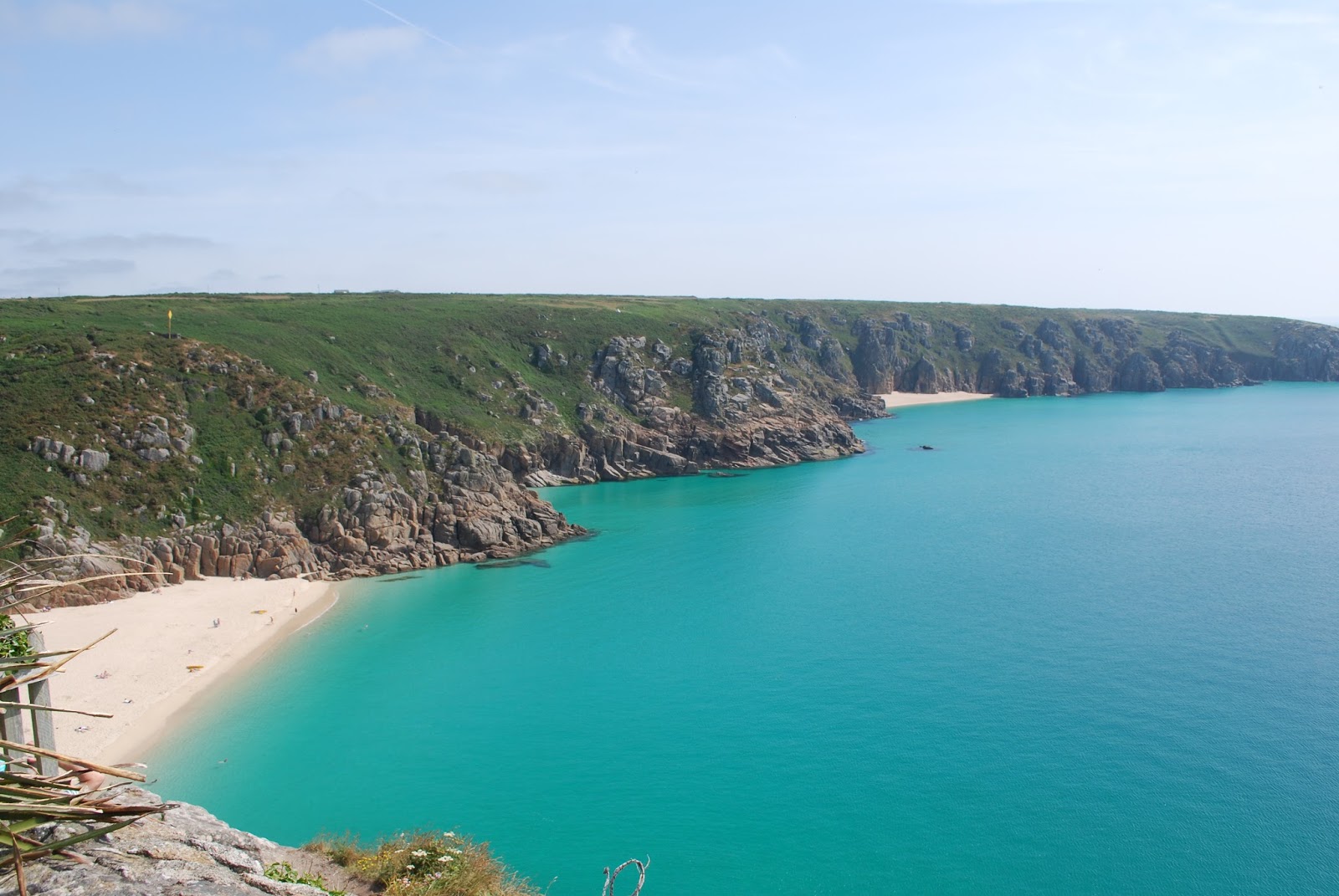
Beyond the stage is a sheer drop down to the sea. In bright summer weather the views are magnificent. (The sea really was this colour on our visit!)

 The concept is that of an Greek theatre. I was reminded of the theatre at Pergamum, in present-day Turkey, though that is very much larger and looks down onto a plain rather than to the sea:-


Saturday, 10 August 2013

The Early Mediaeval International Revolution

In the 10th century the Mediterranean and Middle East were dominated by city-based empires, as had always been the case. All the significant states, whether Christian or Islamic were ruled by “palace culture”, centred on a capital city, with a court and a tax-collecting bureaucracy ruling a population of peasants, defended by mercenary armies. The oldest of the cities was Constantinople, the seat of the Byzantine Empire; but most of the other great cities were Moslem: Baghdad, the seat of the Caliphate; Cairo, Palermo, Cordova. The Christians of the west and the nomads of the Ukrainian steppe were viewed as being much alike: barbarian threats to be contained; useful only as a source of slaves and mercenaries. The situation seemed stable enough, but by the early 13th century the position was changed utterly, with the old empires in full retreat or facing annihilation. How and why had this occurred?

The Caliphate at Baghdad was already a power past its peak. Its authority had once stretched all the way from the Pyrenees to the frontiers of China, but Moslem Spain had been ruled by a separate Caliphate since the mid-8th century, and Egypt and much of North Africa was subject to the Fatimids, a Shiite dynasty. Then in the 11th century the Seljuk Turks, emerging from Central Asia, first occupied Iraq and seized control of the Caliphate, and then in 1071 defeated the Byzantines at Manzikert and flooded into Anatolia, not only turning it permanently into Moslem territory, but transforming the farms of the Greek cities which had dotted the region since the days of Alexander the Great into pasture for sheep. The Seljuk Sultanate did not remain united for long, but the entire balance of the Neat East had been destroyed for ever.
     Further west, Moslem power was in retreat. In Spain, Toledo fell to Christian forces in 1085, and for the next four hundred years Moslem Spain continued to shrink, until finally extirpated at Granada in 1492. There was another permanent change in Italy, where a family of Norman warlords, the Hautevilles, descendents of an obscure knight called Tancred, conquered Sicily and set up their own state there, fighting Moslems and Byzantines indiscriminately.
    So weak and threatened was the Byzantine Empire after Manzikert that the Emperor Alexius was driven to ask for help from the knights of the west, whom he knew well as opponents and mercenaries. The result was the First Crusade, which was not at all what Alexius had envisaged, but which forced its way through the Turks in Anatolia  to take Jerusalem from the Egyptians in 1099 and thereafter raided as far as Egypt and the holy city of Mecca.

Western Europe at the time was a region of weak central authority. The Kings of France had little control over the great lords, and much of present-day France was controlled by the Kings of England; a position which did not change until the early 13th century, when Philip Augustus drove King John of England out of almost all his French possessions. The most powerful state was the Holy Roman Empire, established by Otto the Great in the 10th century, covering Germany and northern Italy. Otto and his successors forcibly intervened in Rome to end a succession of scandalous Popes, opening the way to the pontificate of the great reformer Gregory VII (1073-85). But the claims of the new papacy to universal authority led to conflict with the Emperors which was to tear Italy apart for the next century and a half. The new emerging Italian city-states were able to play off the two rival claimants against each other, as “Guelfs” (supporters of the Pope) or “Ghibellines” (supporters of the Emperor); and as a result, Italy never developed as a nation-state. Almost unnoticed amidst this conflict, a breach came about between the Roman and Byzantine churches in 1054, which became permanent.

The Kings of the western European countries played no part in the First Crusade, which was purely a matter of private enterprise and religious enthusiasm (in varying combination) by great feudal lords, pilgrims and Italian merchants. The reconquest of Spain was similar, with the famous El Cid (Rodrigo Diaz de Vivar: 1043-99) very much an individual freebooter rather than an obedient follower of any King. (Monarchs led the Second and Third Crusades, but without any great degree of success)

The motive that drove the Christian knights and lords was the hunger for land, which they would then hope to rule with as little control from above as possible. This hunger drove the Normans to conquer England in 1066, and to continue thence into Ireland and the Scottish lowlands; whilst at the same time other Normans were overrunning southern Italy and Sicily, and ultimately invading Palestine. (When judging the extreme cruelty of the Normans to anyone who got in their way, we must remember that really they were only second-generation Vikings, with a thin veneer of Christianity which had very little effect on their behaviour)

 The feudal states that resulted from this hunger were decentralized, with a strong tendency to fall into anarchic disorder. It is not surprising that between the crusading knights and the city-dwelling, bureaucratically-governed Byzantines there quickly grew up a profound mutual suspicion and mistrust. The early crusaders actually felt more empathy with the Turks, whose approach to life was not too different from their own. The mutual respect between Richard the Lionheart and Saladin should be seen in the same light: Saladin came from a family of Kurdish mercenary warriors, and he and Richard could understand each other more than either of them could understand a Byzantine emperor. Saladin’s reputation in the west was such that, within a century, Dante accorded him a place amongst the “Virtuous pagans”, whilst many Christian monarchs and even some Popes were depicted writhing in the nether reaches of hell.

Saladin’s recovery of Jerusalem from the crusaders was matched in importance by his takeover of Egypt, where he restored the Sunni faith. Western mistrust of the Byzantines culminated in the disgraceful episode of the Fourth Crusade in 1204, when the crusaders sacked Constantinople itself. Once again, no state was involved, unless we count the Republic of Venice, which cynically manipulated the campaign for its own benefit.

So by the early 13th century, the whole picture of the Near East was different. The eastern Mediterranean was now dominated by Christian ships, especially those of Venice and Genoa. Moslem power had been permanently expelled from Sicily, and was in irreversible retreat in Spain. The Byzantine Empire was shattered, and would be unable to resist a later resurgence of Turkish attacks. Saladin had reunified the main centres of the Islamic world, but the Caliphate was now an empty shell, and the Middle East was about to suffer the hammer-blows of the Mongol onslaught. In the west, stronger states were starting to emerge, but the general picture was still one of feudal anarchy. Except in the Slav regions of eastern Europe, the supply of new land for settlement was drying up. Kings and nobles were less interested in crusading than in rivalry with each other. The Papacy was an independent power in its own right, with claims to universal sovereignty. The world had changed.

Wednesday, 31 July 2013

The Emperor Tiberius on Capri

Tiberius (born 42 BC, reigned 14-37 AD) was the second Roman Emperor, in succession to his stepfather, Augustus. He was not originally intended as the heir. He was kept busy on imperial duties from 20 BC, and showed talent as a soldier and administrator. In 6 BC, being fed up or merely tired, he withdrew to the island of Rhodes for several years to study with the Greek philosophers; but was recalled to Rome when the deaths of Augustus's grandsons left the succession open. In his early years as Emperor he showed republican traits, scornfully rebuffing any obsequiousness or flattery, but he seemed to find personal relationships difficult, and he was never popular.
     In 26 AD he withdrew again, this time to Capri. From there he continued to conduct the bureaucratic side of governing the empire, but he never returned to Rome. In his absence the city fell under the control of two ambitious police chiefs: Sejanus and then Macro, who conducted brutal purges of the senatorial aristocracy; whether on Tiberius's direct orders is not clear. After his death at the age of 79 the imperial title passed to his young great- nephew, Gaius Caligula, whose behaviour soon proved to be insane.
    At some stage, either during Tiberius's lifetime or later, stories began to circulate about grotesque orgies being held on Capri, involving the aged Emperor and swarms of very young children. It was also said that anyone who angered him was flung over the cliffs. It is obviously impossible today to assess the truth of such stories, but Tiberius's critics ever since have gleefully combined them with the cruelty of his police chiefs to paint a picture of the Emperor's all-round wickedness.

The Villa Jovis was just one of many residences that Tiberius built for himself on Capri. It occupied a spectacular site on the extreme north-east tip of the island, looking precipitously down to the sea. It is quite a slog climbing up to it from the town below in the heat of summer, but well worth the effort.
     In amongst the text are some pictures I took, showing the huge extent of the Villa Jovis, and the amazing views.

Tiberius's reputation for wickedness derives from the writings of the two great Roman historians Tacitus (born 55 AD) and Suetonius (born 69 AD). Now it is immediately obvious from these dates that neither man could have spoken to many people with direct personal knowledge of Tiberius; and the more contemporary sources which survive are much less critical of the Emperor. Yet Tacitus assails him in the first six books of the "Annals", stressing his cruelty, his morbidly suspicious nature and the immorality of his personal life. Why Tacitus chose to do this is unclear: modern historians tend to think that his description of Tiberius is actually a coded attack on Domitian (reigned 81-96 AD), a tyrant-emperor from Tacitus's own day.

As for Suetonius, his book "The Twelve Caesars", though a splendidly entertaining read, is best seen as an early exercise in sensational tabloid journalism (in the case of Tiberius, "Paedo Emperor in Capri child abuse horror!"), and the sources for his salacious anecdotes are not known.
Modern readers know Tiberius mostly from Robert Graves's historical novel "I, Claudius", and from the TV series it engendered in the 1980s. The stories which Graves relates with such relish mostly come from Suetonius. Tiberius is portrayed as a flawed yet tragic personality, always conscious that the imperial family used his services but did not like him, and with his personal happiness ruined when Augustus forced him, for political reasons, to divorce his beloved wife Vipsania. The tangled and incestuous family tree of the Caesars was such that Julia, whom he was now ordered to marry, was simultaneously his sister-by-adoption and his step-mother-in-law! The two of them did not get well. One would have thought that all this, together with the later death of his son (possibly murdered; according to the scandal-mongers, no member of the imperial family ever died a natural death!) would have been enough to make anyone embittered!

Also worth a trek on Capri, though it is on the opposite end of the island from the Villa Jovis, is the Villa San Michele, created by the Swedish-born doctor Alex Munthe. It is celebrated in his entertaining but grossly sentimental autobiography "The Story of San Michele"; a world-wide best-seller ever since its publication more than eighty years ago. On the very first pages, Munthe discovers that Tiberius still has an unsavoury reputation on Capri, when he stumbles over a chunk of marble from one of the ancient villas and a peasant girl exclaims, "Timberio camorrista!" - "Timberio" being the local dialect version of the emperor's name, and "camorrista" referring to the Camorra, the much-feared Neapolitan equivalent of the Mafia (still very active today!); the implication being that Tiberius lived on in folk-memory as a thoroughly evil man. But later on, Munthe comes to sympathize with the grim old emperor, conscientiously carrying out his administrative duties into extreme old age, yet resentfully aware that no-one appreciated his work but that everybody hated him.
     We know of politicians with that problem today; though hopefully they do not seek relief from the stresses of office in the same way as is alleged against the Emperor Tiberius!